Addition to my previous post about Court Treasures and Culture, this post will be more on how Confucianism influenced the culture, tradition, social life and art during Joseon Dynasty and modern Korea.

'A Confucian, A Man of Letters'
From young age, a prince had to study Confucian classics, history, law and on top of those, a king had to practise calligraphy as well as composie prose and poetry. Calligraphy was regarded as a means of cultivating one's mind and personality.

Ridiciously neat and nice calligraphy that looks like it's printed.
I wish I could write as pretty as this!

Yi Hwang wrote a guide in Hangul to King Seonjo on how to rule and help his people.

Although Hangul was invented in 1446, but King Hyojang
still wrote in Chinese characters, because Hangul was
intended for commoners who didn't have chance to
learn Chinese characters (someone like me ;P).
 Told my Hubby that I knew how to read the text!
Although the pronounciation a bit different, but at least I can
read these Chinese characters with the help of printed Hangul.
 Kim Jeonghui's rubbing calligraphy '真兴北狩古境' means 'The territory
where King Jinheung (in K-drama Hwarang) toured the north on hunting.'
 Calligraphy of Song Siyeol.

Kim Jeonghu's Calligraphy for his chilhood friend, Kim Yugeun (penname: Mukso).

Although the pronounciation a bit different, but at least I can
read these Chinese characters with the help of printed Hangul.
Life as a Joseon bureacrat could be stressful. In historical drama, we often see victims of political purges or conflicts that arose between scholar-officials, which led some yangban to pursue alternative paths like calligraphy, painting, music and literature.
where King Jinheung (in K-drama Hwarang) toured the north on hunting.'
Confucian Scholars emphazed the value of forests that led the conservation and development of temple gardens, restricted hunting areas and forests. Conservation efforts in Korea actually started when the reign of King Jinheung (Silla Dynasty) who promoted areas of scenic beauty.

Kim Jeonghu's Calligraphy for his chilhood friend, Kim Yugeun (penname: Mukso).
This is regarded as one of the most renowned works of Kim Jeong-hui (penname: Chusa), written in the regular script. The lines, meaning “One should know when to remain silent and when to laugh,” were inspired by the pen-name of his close friend, ‘Mukso Geosa’ (meaning, ‘a person with a silent smile’). One can see that it is written with earnestness, and the sharp brush strokes show the great calligrapher’s depth. (Source: museum.co.kr)
I thought the poster was Toegye Yi Hwang, Confucian scholars (선비 = Seonbi). Seonbi was idolized as the ideal man during the Joseon Dynasty.

There's another painting with ink on silk scroll hanging
at the exhibition hall at the second floor.

Korea Treasure no. 1487 is an impressive portrait of Joseon scholar-official
Seo Jik-su with his critiqued on his own portrait – he thought
the artist didn’t properly portray his mind.

Standing portraits like this one are quite rare in Korea,
because most of the portraits were in seated position.
Seo Jik-su is shown donned in a long overcoat, high hat and white socks. Traditionally, the painters emphasized the facial expressions and features of the face to the tiniest details and to portrait their personality, and intellect, as well as their appearance.
The inscription, written by Seo stated that the court painter Yi Myeong-gi painted the face and to achieve the 3D effect for the face, Yi utilized a shading technique which involved a repetition of fine brush strokes. The rest of the figure was completed by Kim Hong-do with a different shading techniques to depict the heavy folds in Seo’s garment. |
If you watched sageuk drama 'Painter of the Wind (바람의 화원)' you must familiar with these two exceptional painters during Joseon era, Kim Hong do (pen name: Danwon / 단원) and Shin Yun bok (pen name: Hyewon / 혜원).
In this historical fiction, Kim Hong-do was a fierce competitor to Yi Myeong-gi to be selected as the imperial painter for King's Portrait (어진화사).


 Sosu Seowon (Yeongju) & Munseongsa (Ojukheon, Gangneung)
This colorful 45 metre long handscroll meticulously documented King Jeongjo's
procession to his father's tomb in year 1795 which involving 6000 people.


In this historical fiction, Kim Hong-do was a fierce competitor to Yi Myeong-gi to be selected as the imperial painter for King's Portrait (어진화사).
Yun Bok marked Kim Hong do's face because Kim Hong Do asked him to define
3정: Upper, Middle and Lower face.
5악: South (forehead), North (chin), East (left cheek),
West (right cheek) and Central (nose). (Photo: Wikipedia)
Slanted eyes portrait drawn by Kim Hong Do and Yun Bok in the drama.
Actually, the real painter for Chae Je-gong's portrait was Yi Myeong-gi.
Portrait of Seo Maesu - First State Councilor (left) and
Potraits of Successful Candidates of the Deungjunsi
Military Examination (right).
The rank badge embroidery on the chest signify the rank. Seo Maesu was holding the highest government post wore green robe with two cranes design. Tiger and leopards which symbolised courage were for military officials.
Portrait paintings were important in Confucian society because it was believed that the portrait enabled to bring out person's spirit and soul to allow that person to be resurrect alive.
Royal Portrait Museum & Jeonju Hyanggyo in Jeonju.
Royal Portrait Museum, Seowon Confucian Academies, private memorial shrines are common places to enshrine the portraits and perform rites to pay respect to ancestors or historical figures.
Besides portraits, there're others aesthetics artworks recorded where you can witness a glimpse of culture and tradition and lifestyle of Joseon Dynasty that adopted Confucianism principles.
procession to his father's tomb in year 1795 which involving 6000 people.
King Jeongjo pay respect to royal tomb of his father (Crown Prince Sadoseja) every year. His visit in year 1795 coincided with his mother's 60th birthday (환갑 = hwangap). Therefore, he held a feast was held at Hwaseong Haenggung Palace in Suwon because it's considered auspicious for a person to completed the first 60-year cycle.
Bongsudang Hall means "to plead for a long enough life," for King Jeongjo's mother.
appears in scenes of K-drama 'Moonlight Drawn by Clouds'
as the living quarters of the Crown Prince.
Reception of Japanese Envoy.
Ten-fold screen painting with ink and colors on paper from right to left
starting with the procession and ended with welcoming banquet.
Celebrating the birth of Crown Prince Yi Cheok.
Another ten-fold screen painting, but this one on silk instead of paper. King Gojong was indicated by Sun, Moon and Five Peaks screen and the red throne in the main hall because it's forbidden to paint the king except for Royal Portrait.
A pair of 2-panel folding screens were painting of 60th birthday banquet for
Elder Queen Mother Sunwon (Wife of King Sunjo)
in Changgyeonggung Palace.
Although both paintings look seemingly identical, the left captures the same banquet by night because lanterns were found only in the left painting of the pair. Please watch the video of the detailed explanation from the assistant curator.


'Shoeing A Horse' (left) and paintings of man prentended blind
to peek at a woman washing clothes with her skirt hiked up.
to peek at a woman washing clothes with her skirt hiked up.

Birds and Flowers Paintings by Nam Gyewoo.


Painting from Album of Eight Views of Seoul and its vicinity.
Painting by Sim Sajeong & Art critic by Kang Sehwang
acknowledged the work as a masterpiece.
Folk paintings portrayed the ordinary lives of people, 'true-view' landscape, animals,
flowers, plants were part of brush paintings that flourished during that era.

 The Ninth King of Hell (left) with a scale to weight one's misdeeds & The Tenth King
of Hell (right) with Karma Mirror will decide the final judgement which one of the
six realms (bottom left) the person will be reborn in the next life.
 Portrait of Monk Ssangwoldang by Hyesandang Chugyeon.

flowers, plants were part of brush paintings that flourished during that era.
of Hell (right) with Karma Mirror will decide the final judgement which one of the
six realms (bottom left) the person will be reborn in the next life.

The Chinese characters at the end of the scroll state that it was painted by a monastic painter named Hyesandang, one of the most famous Buddhist painters at the end of the Joseon Dynasty.
The prayer beads represent his devotion to Buddha's teachings, while the book in the background symbolise his great learning.
Monks were rank after they passed the higher state examination (high to low): Great Virtue (daedeok), Great Master (daesa), Double Great Master (jung daesa), Triple Great Master (samjung daesa), Zen Master (seonsa), Great Zen Master (dae seonsa).

Portrait of Choe Yeonhong by Chae Yongsin.
Unnangja (Choe Yeonhong) was a gisaeng and recognised for her patriotic acts during the Rebellion of Hong Gyeongrae in 1811. On the upper right, it stated that her age was 27 at the time of rebellion. The composition, reminiscent of Virgin and Child images of Christianity which reflect the influence of Western art.
Portrait paintings was important for ceremonial rites to respect the ancestors and those contributed to the nation. Portrait of Choe Yeonhong with Gyewolhyang, another brave gisaeng who was bravely assisted in assassinate a Japanese commander during Imjin War were enshrined in Uiyeolsa Shrine.
Confucian was held as social ideology which emphasize 'yang' (male-related) dominant, therefore portraits of women were rare that even queens and noblewomen couldn’t be painted. King Sukjong wanted to commission a portrait of Queen Inhyeon but there was uproar that the court male painters will be looking at her for too long! Ended he gave up and therefore there's no portrait of queen.
I like traditional paintings especially when they included lines of beautiful poem in calligraphy. Therefore, these few dramas such as 'Painter of the Wind,' 'Hwang Jin Yi,' and 'Saimdang: Light's Diary' showing their talents in arts.
Talking about painting, Saimdang was one of the great female artists during Joseon Dynasty, but her artworks either paintings or calligraphies were not displayed here.


Collection of Saimdang's Chochungdo painting of
plants and insects and Calligraphy shown at Ojukheon Museum.
Despite her outstanding talents as an artist herself, in that that era she's recognised more as wise mother of seven children including Yulgok Yi I, the smart and famous Joseon Confucian Scholar.
Learned more about the history and culture during Joseon from this exhibition. Actually, there are more things, but 5 hours were not enough for me to look and read everything in details. Although, I was familiar with some of the names as they appeared in Sageuk dramas.
Really wish to know and learn more on Korean culture and tradition, language, correct etiquettes and manners so that I can relate when watching historical dramas or when visiting Korea.
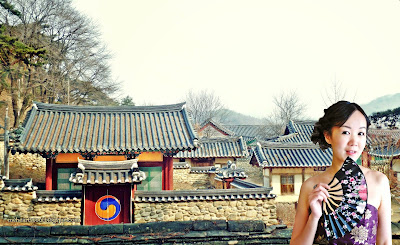
Located near the venue of Pyeongchang Olympics, you might not want to miss these 2 beautiful traditional Hanok houses with rich history which often used as filming locations for historical dramas. Please click on the links for more details.


Related Posts: